Operations

Our projects and capability

From exploration through to development, our sites are run with disciplined technical execution, strong logistics and continuous monitoring.

Project portfolio

Where we operate

View all projects

Project Jerusalem

Location
Dr Ruth Segomotsi Mompati district, Schweizer-Reneke, North West
Primary resource
Gold & iron ore (PGMs, chrome)
Status
Exploration

Our flagship programme across five farms totalling 7 100 hectares in the Schweizer-Reneke Greenstone Belt — Jerusalem 133 HO, Twyfel 121 HO, Avondster 120 HO, Welkom 253 HO and Uitkyk 104 HO. Prospecting right application 14661PR was accepted on 20 January 2025, with the biodiversity study and quantum calculation report completed. The plan runs from an 8-month assessment study through pre-feasibility and bankable feasibility to a 74-year life of mine.

View the full project
Schweizer-Reneke Belt regional exploration

Location
Schweizer-Reneke Greenstone Belt, North West
Primary resource
Gold-bearing siliceous banded iron formation
Status
Ongoing

Geoscience surveys, literature review and early prospecting works across a belt roughly 4 km wide and 55 km long within the Kaapvaal Craton — a district worked intermittently since gold was discovered in 1903.

Drilling programme

How we drill and prove ore

Drilling is the backbone of our exploration work. Every hole feeds the geological model that defines tonnage, grade and mine design — from wide-spaced first-pass holes through to the infill drilling and assaying budgeted in Phase 1 of Project Jerusalem.

Percussion / RC drilling

First-pass reverse circulation holes on a wide grid to test the strike of the gold-bearing banded iron formation and generate rapid, low-cost assay samples.

Diamond core drilling

NQ/HQ core for structural logging, density and metallurgical test work — the basis for 3D modelling of rock type, faults and mineralised boundaries.

Infill & resource drilling

Tighter-spaced holes over defined targets to lift confidence from inferred to indicated and measured categories ahead of feasibility.

Logging, sampling & QA/QC

Chain-of-custody sampling, half-core splitting, certified standards, blanks and duplicates submitted with every assay batch to an accredited laboratory.

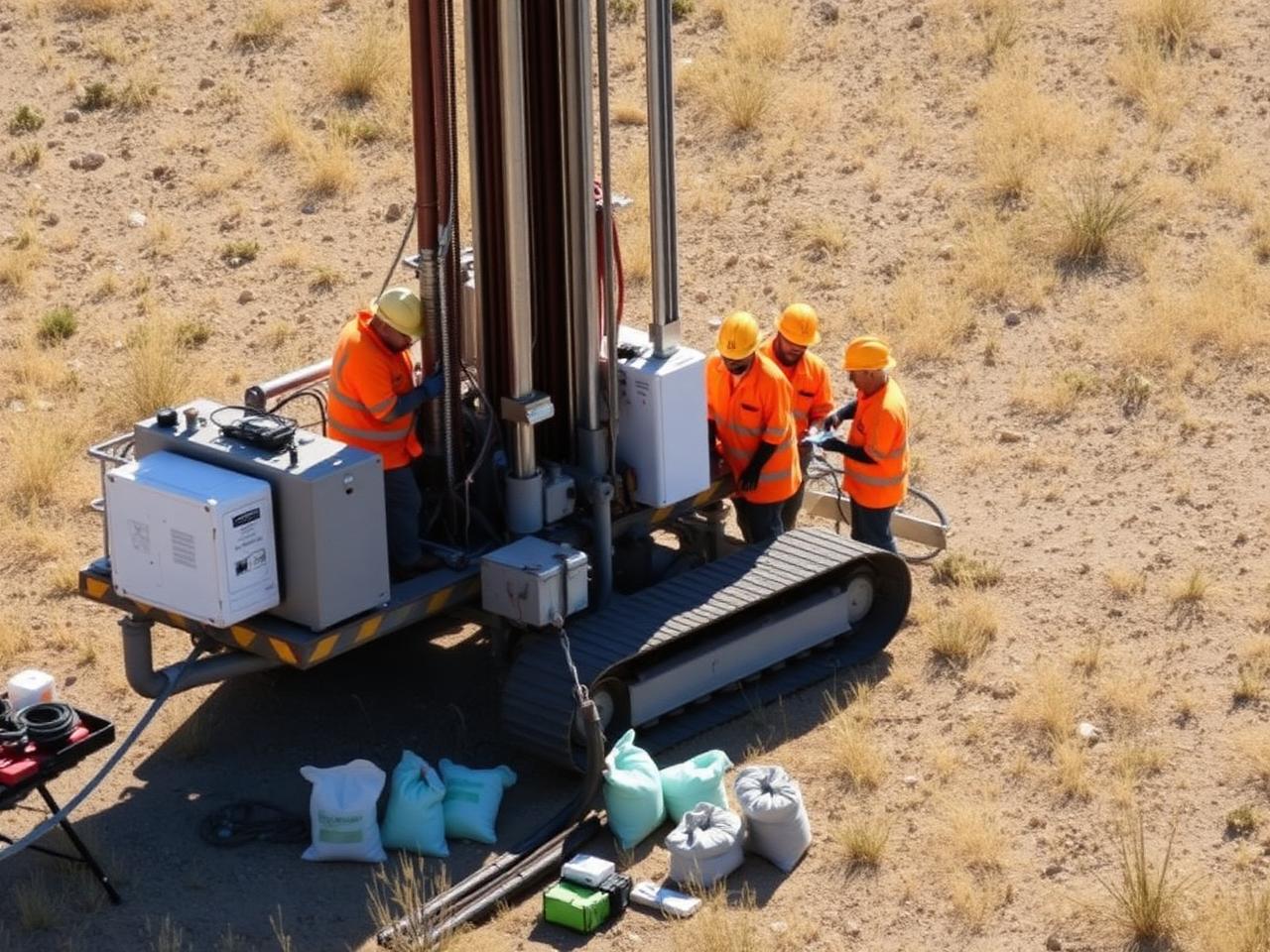
Drill rig and crew collecting samples on an exploration site

End-to-end process

Drilling to closure: the full cycle

Tap each stage to expand the detail. The timeline traces how a target moves from regional assessment through drilling, evaluation and mining to progressive rehabilitation — the lifecycle that underpins every Radebe Technical Projects site.

  1. Compile all public and historical data, then walk the ground to rank targets before any rig moves.

    What happens here

    • Geoscience literature review and geophysical survey interpretation across the Schweizer-Reneke Greenstone Belt.
    • Structural and lithological mapping of the banded iron formation strike.
    • Geochemical stream-sediment and soil sampling on a regional grid.
    • Target ranking against the quantum calculation and biodiversity baseline.

    Stage outputs

    • Ranked target register
    • Access and land-use agreements
    • Scoping environmental baseline

Mining

Mining method and cycle

Method
Open pit on shallow, low stripping-ratio zones; underground shrinkage stoping where the reef dips beyond economic pit limits
Cycle
Drill and blast, load and haul, crush and screen, then process and tailings placement
Grade control
Bench-scale sampling and reconciliation against the block model before each blast
Products
Gold doré and saleable iron ore fines and lump, with PGM and chrome potential under assessment
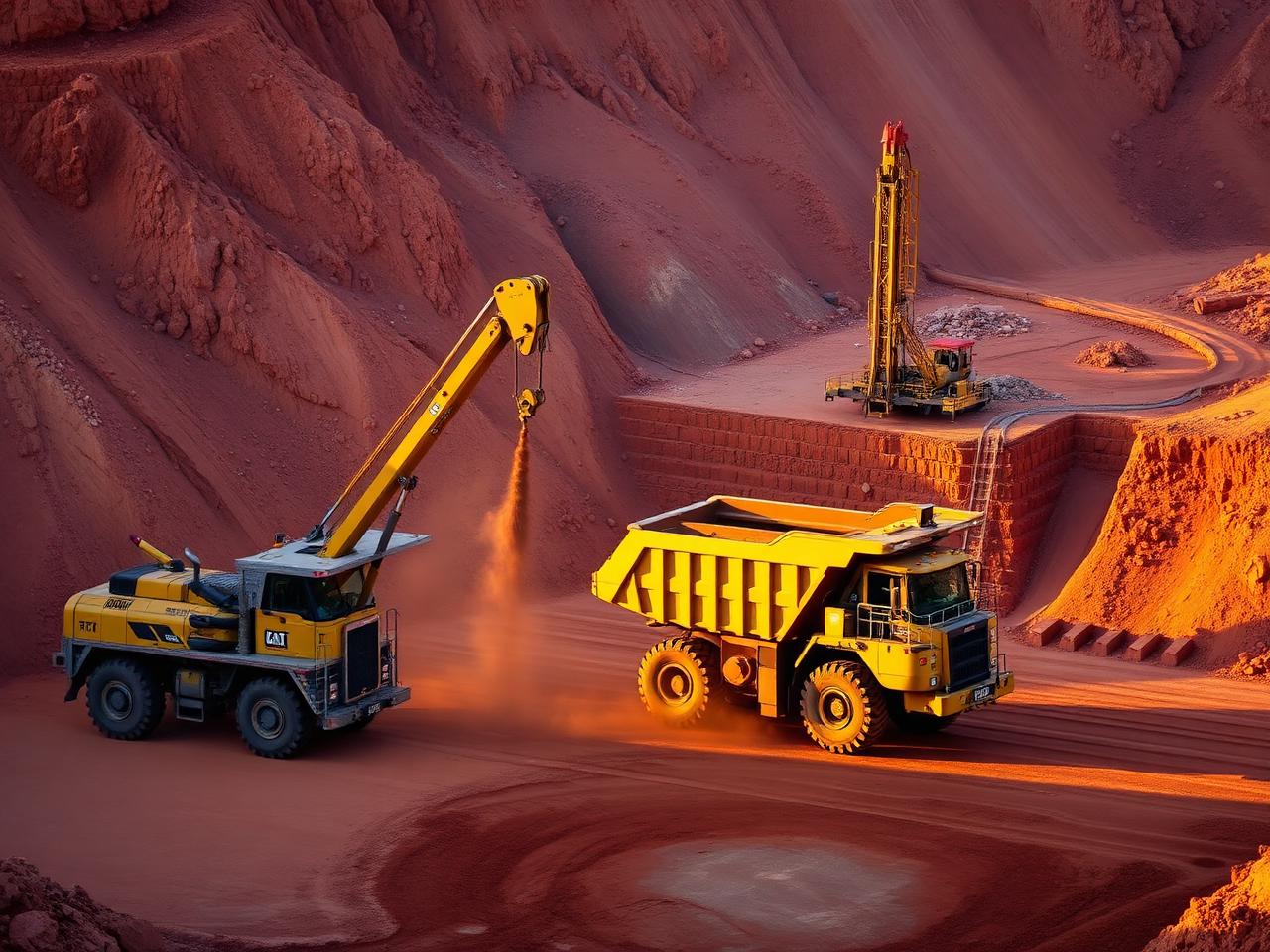
Excavator loading a haul truck at an open pit mining operation

Equipment & machinery

Our fleet

Fleet is matched to each phase of work — light exploration units during prospecting, scaling to a full production fleet as pits are opened. Plant is maintained on a planned schedule with condition monitoring to protect availability.

Drill rigs

Track-mounted RC and diamond core rigs, plus top-hammer production drills for blast-hole patterns.

Excavators & front-end loaders

Hydraulic excavators for bench loading and wheel loaders for stockpile and ROM pad handling.

Rigid & articulated haul trucks

Haulage fleet sized to the pit profile, moving ore and waste to the ROM pad and waste dumps.

Dozers, graders & water carts

Bench preparation, haul-road maintenance and dust suppression across the working area.

Crushing & screening plant

Mobile jaw and cone crushers with screening decks to size ore ahead of processing.

Support fleet

Service and fuel bowsers, lighting plants, generators, light delivery vehicles and mobile workshops.

Technology & innovation

Technology that lifts safety and yield

Autonomous haulage

Mechanised material movement that reduces operator exposure on haul routes.

Drone surveying

Rapid aerial survey and volumetric tracking across the exploration zone.

AI predictive maintenance

Equipment health monitoring that prevents unplanned downtime.

Advanced water filtration

Treatment and recycling systems that cut fresh water demand.

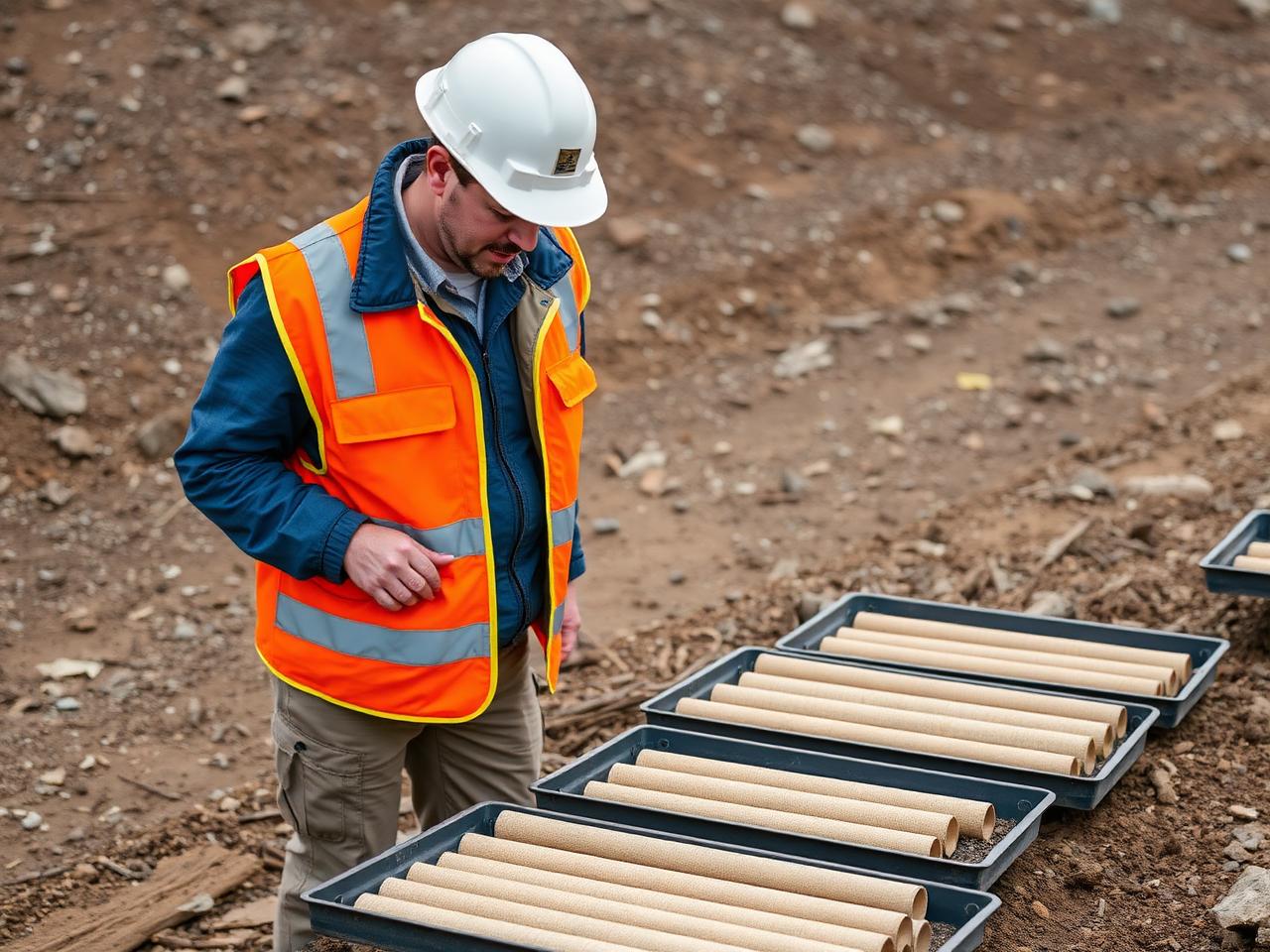
Core samples laid out for geological analysis