Project Jerusalem — The Promised Land

Gold and iron ore in the Schweizer-Reneke Greenstone Belt

Five farms totalling 7 100 hectares in the Dr Ruth Segomotsi Mompati magisterial district near Schweizer-Reneke, North West Province, targeting gold, iron ore, platinum group metals and chrome.

7 100 ha

Across five farms

74 yrs

Life of mine plan

22.06m oz

Total gold in LOM plan

The opportunity

A belt with a century of gold history

Radebe Technical Projects identified an area within the Schweizer-Reneke Greenstone Belt near Schweizer-Reneke with potential for both gold and iron ore. That opportunity was manifested into Project Jerusalem, held across five farms covering 7 100 hectares in the Dr Ruth Segomotsi Mompati magisterial district.

The project forms part of the several greenstone belts within the Kaapvaal Craton. The area has been intermittently mined by artisanal and small-scale operators such as Blue Dot Mining Company since gold was discovered in 1903. The Schweizer-Reneke Greenstone Belt is approximately 4 km wide and 55 km long, with scarce outcrop that makes an accepted regional stratigraphy difficult to establish.

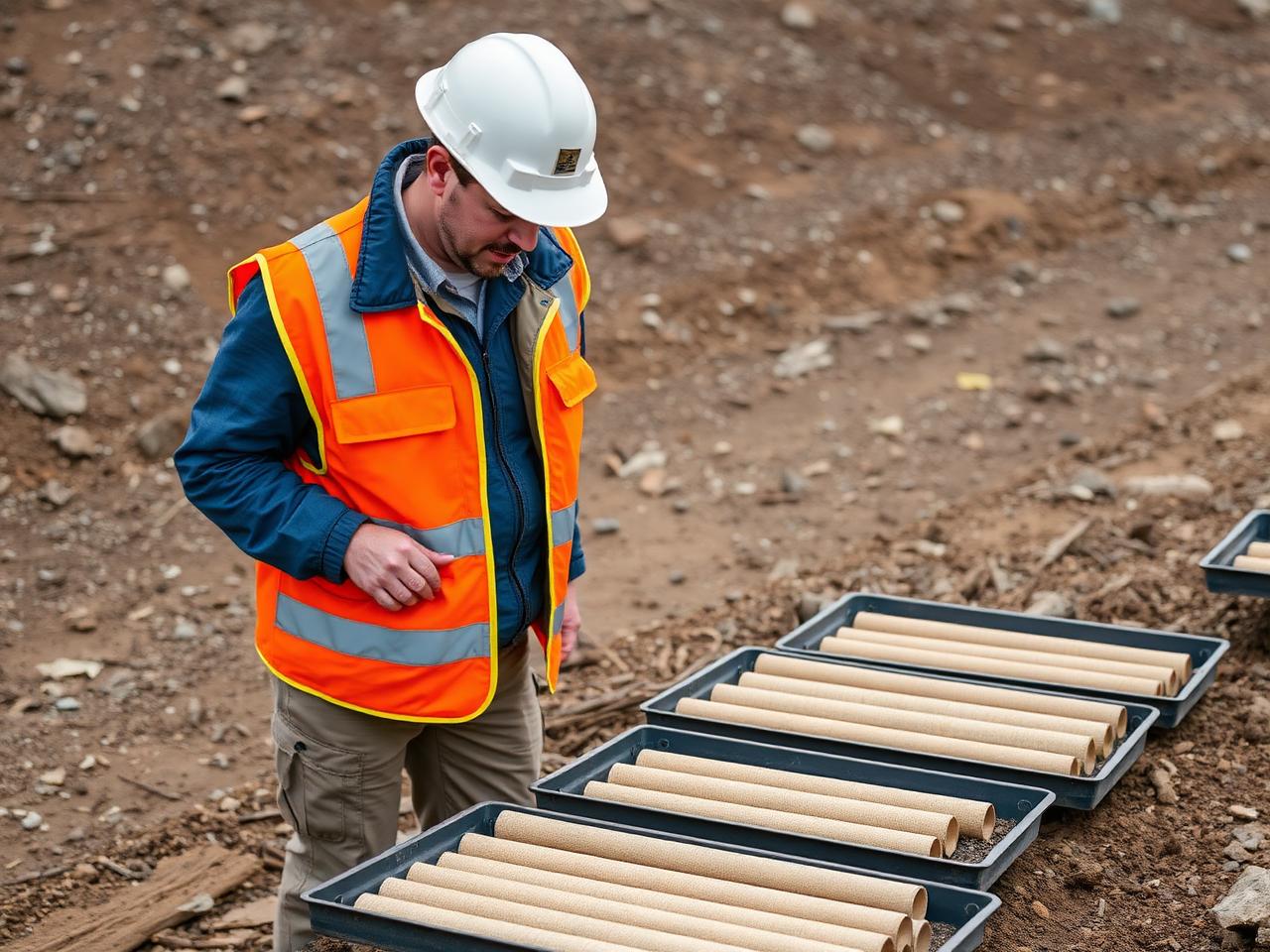
Drill core samples from the Schweizer-Reneke Greenstone Belt laid out for logging

Mineral rights

State of our rights applications

14661PR

Accepted 20 January 2025

District
Dr Ruth Segomotsi Mompati district, Schweizer-Reneke
Farms
Jerusalem 133 HO, Twyfel 121 HO, Avondster 120 HO, Welkom 253 HO and Uitkyk 104 HO
Target commodities
Gold, iron ore, platinum group metals and chrome
Progress
Biodiversity study successfully completed together with the required quantum calculation report.
Mining right application

Active application

District
Dr Ruth Segomotsi Mompati district, Schweizer-Reneke
Farms
The same five farms — Jerusalem 133 HO, Twyfel 121 HO, Avondster 120 HO, Welkom 253 HO and Uitkyk 104 HO
Target commodities
Gold and iron ore
Progress
Securing prospecting right statutory approvals is underway, with mining rights, water use and environmental licences targeted in the discovery phase.

Geology

Greenstone shear zone gold and banded iron formation

Shear zone model

Seismic work at Red Lake Mine in Canada demonstrates deep crustal faults transporting banded iron formation to surface, with mineralised magma later injecting mesothermal gold into cracks already filled with iron formation — carrying gold to surface along the BIF.

Schweizer-Reneke BIF

Two BIF types occur at Schweizer-Reneke: iron-rich and siliceous. Siliceous BIF is of greatest interest — it is the only economic gold carrier across the Schweizer-Reneke belt deposits. The strongly magnetic unit is carbonate altered in places and enveloped by silicified schist and iron-rich BIF/jasper. SiO2 ranges 32.38–93.26 wt% in mineralised BIF, inversely related to Fe2O3 at 3.8–41.42 wt%.

Ore mineralogy

The ore body consists largely of pyrite with traces of chalcopyrite, pyrrhotite and gold; gangue minerals include quartz and various carbonates. High grade ore is characterised by massive pyrite inclusions at the contact between hematite and chert, with magnetite scattered through the chert matrix.

Exploration programme

How we explore a shear zone deposit

  1. 1Seismic survey to determine the deepest structures and channels
  2. 2Regional magnetic and gravity mapping of main structures, local bends, magnetite enrichment and conglomerates
  3. 3Induced polarisation for associated sulphides
  4. 4Soil and rock geochemistry
  5. 53D modelling of rock structure and type from drill information — hard boundaries, major faults, mineralisation
  6. 6Development of the mineralisation envelope

Comparable deposits

Greenstone belts host the world's highest grades

Gold mined from greenstone belt deposits is usually far higher grade than gold from other deposit types. Project Jerusalem is similarly expecting high grade comparable to these deposits.

Mining method: near-surface ore is mined by open pit where the stripping ratio allows, with underground shrinkage stoping and cut-and-fill stoping below. Around 10–20% of ore in these deposits is typically refractory.

Study programme

Phased route to a bankable project

Phase 1 — Project assessment study

8 months
  • Infill drilling, assaying and resource determination
  • Metallurgical test-works
  • Geotechnical investigations
  • Hydrological investigations
  • Engineering and study management

Phase 2 — Preliminary feasibility

18 months
  • Preliminary Economic Assessment / scoping study (40–50% accuracy)
  • Pre-Feasibility Study covering metallurgy, rock mechanics, mining and engineering
  • Study accuracy of 20–30%

Phase 3 — Bankable feasibility

10 months
  • Bankable Feasibility Study across metallurgy, rock mechanics, mining and engineering
  • Environmental, socio-political and legal studies
  • Tax and financing structures
  • Study accuracy of 15%

Phase 1 budget breakdown

Infill drilling & assaying
Metallurgical test-work
Engineering and study management
Geotechnical investigations
Hydrological investigations
Salaries and onsite costs
Preliminaries & generals (P&G's)

Costed on the Marshall & Swift cost index for mining and milling. Estimated time frame: 8 months.

Proposed timeline

From exploration to closure

Exploration

Underway — ongoing

  • Geoscience survey
  • Literature reviews
  • Early prospecting works
  • Securing prospecting rights

Discovery

6 months

  • Raising study funding
  • Infill drilling, assaying and resource determination
  • Metallurgical, geotechnical and hydrological investigations
  • Securing mining rights, water use licence and environmental licences

Development

42 months

  • Raising capital
  • PEA, Pre-Feasibility and Bankable Feasibility studies
  • Detailed engineering
  • Construction

Production

74 years

  • Mining
  • Processing
  • Sales & marketing

Reclamation

24 months

  • Closure
  • Rehabilitation
  • Creating value to the land

Investment case

Why Project Jerusalem

Large-scale mining at Schweizer-Reneke

Introduction of a large-scale operation into a belt historically worked only by artisanal and small-scale miners.

New generation social model

A community–mining symbiotic model that integrates the operation with the people around it.

Proven gold district

A well established gold deposit with more than 100 years of mining history since discovery in 1903.

Experienced mining team

A team of highly experienced mining professionals assembled to translate resource into a bankable project.

High expected returns

A long-life operation supported by at least a 74-year life of mine.

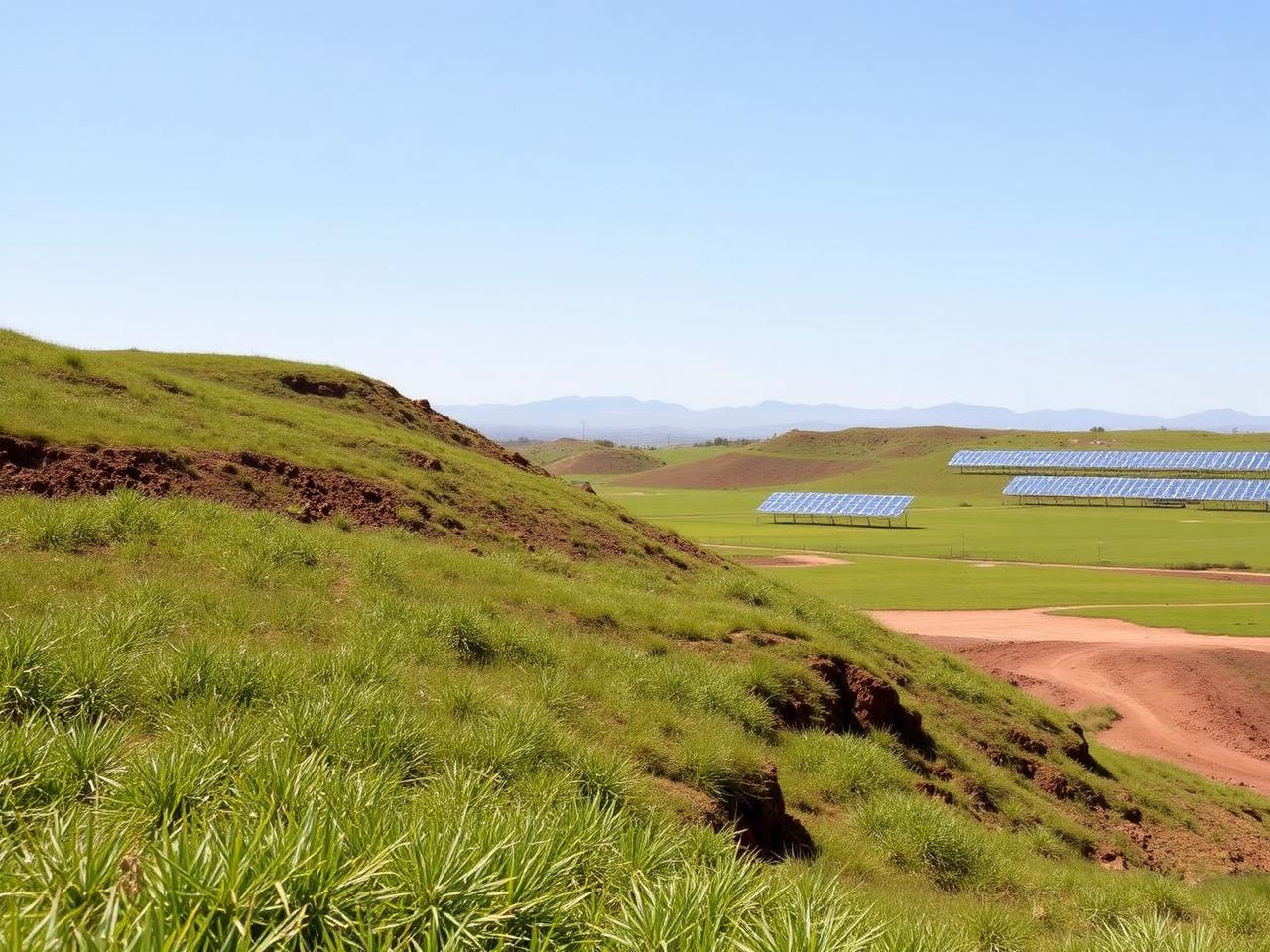
Rehabilitated land alongside a working mining operation

Social investment case

A community–mining symbiotic model

  • — Develop a new generation community–mining symbiotic model that catalyses change and growth.
  • — Establish sustainable development for the community.
  • — Create economic value through the mining value chain and enable marginalised and subsistence communities to join the cash economy.
  • — Provide significant intervention to social ills caused by poverty.
  • — Create infrastructure that supports prosperous living.
Discuss this project

Restricted documents

Available on request

The following documents contain commercially sensitive technical and financial information and are not published openly. Qualified investors, partners and regulators may request access subject to a confidentiality agreement. Reach out to our project team using the contact details below.

Financial models & valuations

Project economics, NPV and IRR models, capital cost estimates and revenue projections across the phased study programme.

Restricted

Bankable Feasibility Study

The full BFS covering metallurgy, rock mechanics, mining method, engineering and study accuracy for financing.

Restricted

Mineral resource estimate

Drill hole database, assay results, 3D resource model and the mineralisation envelope for the five farms.

Restricted

Phase 1 budget & cost breakdown

Detailed Phase 1 assessment-study cost build-up costed on the Marshall & Swift index for mining and milling.

Restricted

Geotechnical & hydrological reports

Rock mechanics, slope stability, groundwater and water-use licence supporting investigations.

Restricted

Environmental & biodiversity studies

Biodiversity assessment, quantum calculation report and environmental management programme records.

Restricted

Request document access

Submit your request and a member of our project team will respond with the applicable confidentiality terms.

Request access